Stone route No. 2 | Steinweg Nr. 2
Slivia, tra Castellieri, cave e grotte
Slivno, med gradišči, kamnolomi in jamami
Slivia, hillforts, quarries and caves
Slivia, castellieri, Steinbrüche und Höhlen
Il borgo di Slivia
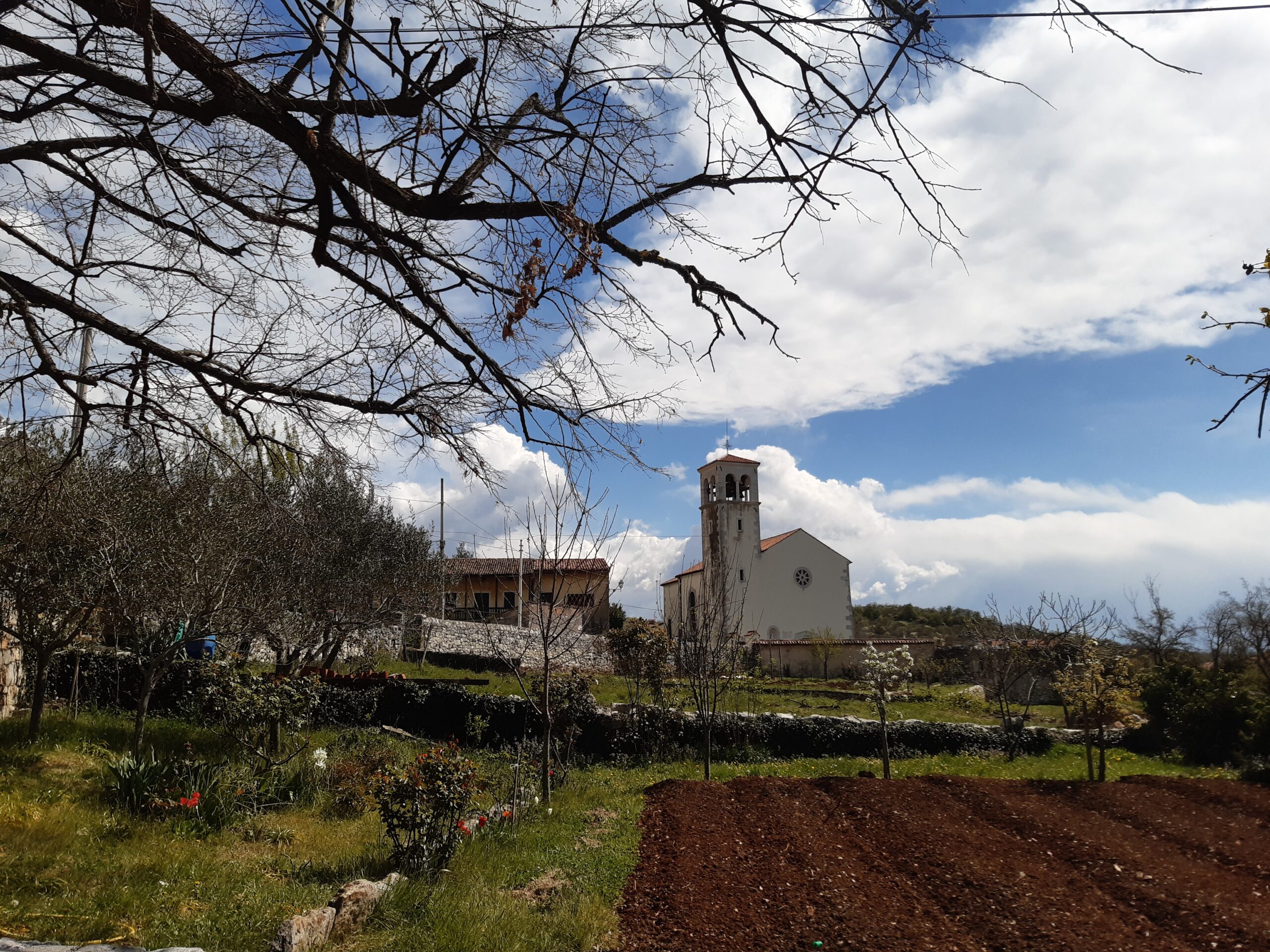
Hai raggiunto l’ultima tappa della Via della Pietra n.2 e sei nuovamente nel borgo rurale di Slivia, un piccolo centro agricolo del Carso interno, sorto nel XIV secolo accanto ad un più antico snodo viario della Gemina, la strada carrabile risalente all’epoca romana (I sec. a.C.) che collegava Aquileia e Emona, l’attuale Lubiana (SLO). Il nome del paese deriva da un termine sloveno che significa susina, e osservando i dintorni del paese noterai ampi coltivi a viti, ulivi e alberi da frutto che qui prosperano grazie all’ottima esposizione verso Sud Ovest. A tal proposito, se osservi gli edifici del borgo, vedrai che anche le costruzioni sono disposte con attenzione all’esposizione agli elementi naturali: mura continue e finestre minime sul lato contro Bora, il tagliente vento che soffia da Est-Nord-Est, finestre e balconi affacciati sui cortili rivolti a Sud-Ovest, al riparo dalle terribili raffiche. Non ti sarà sfuggito che ogni dettaglio architettonico è costruito in pietra locale: mura e muretti, portali, erte, comignoli, lastre per la copertura dei tetti, scale, grondaie e vere da pozzo. Molte case storiche presentano una conformazione tradizionale, a due piani con ballatoio al piano superiore e scale esterne, e focolare in pietra al piano terra spesso sporgente dal corpo dell’edificio. Dell’abitato di Slivia si hanno notizie dai registri ufficiali dei terreni agricoli a partire dal 1300, ma è difficile scovare testimonianze architettoniche così antiche: puoi invece andare a scoprire i raffinati o curiosi bassorilievi scolpiti sui portali di accesso ai cortili privati. Ne troverai parecchi risalenti all’Ottocento, impreziositi da simboli cristiani e pre-cristiani, dar bella mostra di sé sull’architrave e sui pilastri dei portoni a protezione della casa e dei suoi abitanti. Ancora pochi passi e puoi raggiungere la chiesa dedicata a Santa Maria Maddalena. Pur non conservando nulla dell’impianto originale – probabilmente anteriore al 1500 – questa chiesa custodisce una vera rarità per il territorio: il cimitero a ridosso dell’edificio, come in uso prima delle riforme sanitarie introdotte in zona a partire dalla fine del Settecento per tutelare la salubrità degli abitati. Sul fianco della chiesa troverai anche una tabella che indica i micro-toponimi locali, un modo per apprezzare quanto la vita di un piccolo paese fosse vivace e collegata alla storia delle singole famiglie e delle rispettive professioni e abitazioni.
Slivia
Prispeli ste do zadnje postaje Poti kamna št. 2 in se ponovno znašli v Slivnem, majhni vasi na Dolenjem Krasu. Vas je nastala v 14. stoletju, nedaleč od nekdanje postojanke na poti Gemina, rimski cesti iz 1. stoletja pr. n. št., ki je povezovala Oglej in Emono, današnjo Ljubljano. Ime vasi izvira iz slovenske besede ‘sliva’. V okolici boste opazili obsežne nasade vinske trte, oljk in sadnega drevja, ki dobro uspevajo zaradi ugodne jugozahodne lege.
Če se ozrete še po vaških domačijah, boste opazili, da je njihova zasnova prilagojena naravnim danostim: na strani, izpostavljeni burji, ostremu vetru, ki piha z vzhoda oziroma severovzhoda, so zidovi sklenjeni, okna pa majhna. Večja okna in balkoni gledajo na dvorišča, obrnjena proti jugozahodu, kjer so zaščitena pred silovitimi sunki.
Gotovo ste opazili tudi, da so vsi arhitekturni elementi izdelani iz tukajšnjega kamna: zidovi in zidci, portali, podboji, dimniki, skrle za kritino, stopnice, žlebi in vodnjaki. Mnoge starejše hiše imajo tradicionalno zasnovo: so dvonadstropne, v zgornjem nadstropju je gank z zunanjimi stopnicami, v pritličju pa kamnito ognjišče, ki je bilo pogosto prizidano k prvotni stavbi.
Čeprav se Slivno v urbarjih, uradnih evidencah kmetijskih zemljišč, omenja že od začetka 14. stoletja, težko najdemo tako stare arhitekturne ostanke. Lahko pa si ogledamo prefinjene in zanimive detajle, ki so vklesani v portale zasebnih dvorišč in segajo tudi v 19. stoletje. Preklade in nosilni stebri krasijo krščanski in predkrščanski simboli, ki varujejo hišo in njene prebivalce pred zlom.
Še nekaj korakov in prispeli boste do podružnične cerkve sv. Marije Magdalene.
Čeprav na stavbi ni več vidnih sledov prvotne zasnove, ki verjetno sega v čas pred 16. stoletjem, ob njej najdemo značilnost, ki je v teh krajih prava redkost: pokopališče tik ob cerkvi, kot je bilo v navadi pred higienskimi reformami, uvedenimi konec 18. stoletja z namenom varovanja javnega zdravja.
Ob cerkvi boste našli tudi tablo z lokalnimi ledinskimi imeni. Ta razkrivajo, kako živahno je bilo nekoč življenje v majhni vasi in kako tesno je bilo povezano z zgodovino posameznih družin, njihovimi poklici in domovi.
Dorf Slivia
Sie haben die letzte Etappe des Steinwegs Nr. 2 erreicht und befinden sich wieder im Dorf Slivia, einem kleinen landwirtschaftlichen Zentrum auf dem inneren Karst, das im 14. Jahrhundert an einem noch älteren Knotenpunkt der Via Gemina entstand, einer befahrbaren Straße aus der Römerzeit (1. Jh. v. Chr.), die Aquileia und Emona, das heutige Ljubljana (SLO), verband. Der Name des Dorfes leitet sich vom slowenischen Wort für „Pflaume“ ab, und wenn Sie sich die Umgebung anschauen, werden Sie weitläufige Anbauflächen mit Weinreben, Oliven- und Obstbäumen sehen, die hier dank der hervorragenden Südwestlage sehr gut gedeihen. Beim Betrachten der Häuser im Dorf werden Sie feststellen, dass auch deren Anordnung sorgfältig an die Witterungseinflüsse angepasst wurde: durchgehende Mauern und nur wenige Fenster auf der Seite, aus der die Bora kommt – jener eiskalte Ost-Nordost-Wind –, während Fenster und Balkone auf die nach Südwesten ausgerichteten Innenhöfen gehen, die vor den starken Windböen geschützt sind. Ihnen wird sicher nicht entgangen sein, dass jedes architektonische Detail aus lokalem Stein gefertigt ist: Mauern und Mäuerchen, Türrahmen und Tore, Steigen, Schornsteine, Dachplatten, Treppen, Regenrinnen und Brunnenmauern. Viele alte Häuser sind in der traditionellen Bauweise gebaut: zweistöckig mit einem überdachten langen Balkon im Obergeschoss und Außentreppen sowie einer Feuerstelle aus Stein im Erdgeschoss, die oft aus dem Gebäudekörper herausragt. Über das Dorf Slivia gibt es seit dem Jahr 1300 Einträge in den offiziellen Registern der landwirtschaftlich genutzten Flächen, doch es ist schwierig, so alte architektonische Zeugnisse zu finden: Stattdessen können Sie die raffinierten oder kuriosen Flachreliefs entdecken, die in die Toreingänge zu den privaten Innenhöfen gemeißelt sind. Sie werden viele aus dem 19. Jahrhundert finden, die mit christlichen und vorchristlichen Symbolen verziert sind und gut auf Querbalken und Torpfeilern zu sehen sind, damit sie das Haus und seine Bewohner schützen. Noch ein paar Schritte, und Sie erreichen die Kirche Santa Maria Magdalena. Auch wenn von der ursprünglichen Kirche – die wahrscheinlich aus der Zeit vor 1500 stammte – nichts erhalten geblieben ist, beherbergt diese Kirche eine echte Rarität für diese Gegend: Der Friedhof liegt direkt hinter der Kirche, wie es üblich war vor den ab dem ausgehenden 18. Jahrhundert zum Schutz der Gesundheit der Dorfbewohner eingeführten Gesundheitsreformen. An der Seite der Kirche finden Sie außerdem eine Tafel mit den lokalen Ortsnamen – daran können Sie erkennen, wie lebendig das Leben in dem kleinen Dorf war und wie eng es mit der Geschichte der einzelnen Familien sowie deren Berufen und Häusern verbunden war.
Village of Slivia
You have reached the final stop of the Stone Route no. 2. You are back in the rural village of Slivia, a small farming community of the inland Karst. Slivia was established in the 14th century, next to an ancient crossroads along the Via Gemina, the Roman carriage road (1st century BC) that linked Aquileia to Emona, present-day Ljubljana (Slovenia). The name Slivia derives from the Slovene word for “plum”. At a glance, you can see that the village is surrounded by extensive vineyards, olive groves and orchards, which thrive here thanks to the excellent southwestern exposure. The very layout of buildings in the village is determined by climatic conditions. The houses feature solid walls with minimal windows on the side facing the Bora – the biting easterly or north-easterly wind. Conversely, windows and balconies open up onto the southwest-facing courtyards, sheltered from the strongest gusts. Almost every architectural element here is crafted from local stone: buildings, property walls, gateways, pillars, chimneys, roof slabs, staircases, gutters and wellheads. Several historic homes are built in the traditional way with a two-storey layout, featuring an upper-floor balcony with an outdoor staircase, and a ground-floor stone hearth that often protrudes from the main body of the building. The settlement of Slivia was first mentioned in official agricultural land registers in the 14th century, but earlier architectural remains are scarce. However, you can still discover elegant and intriguing bas-reliefs carved into the entrance portals to private courtyards. You’ll find quite a few dating back to the 19th century; these lintels and pillars are adorned with Christian and pre-Christian symbols intended to protect the household and its inhabitants. Just a few steps away stands the church dedicated to Saint Mary Magdalene. Although nothing remains of its original layout from the 15th century or earlier, the church preserves an unusual feature for the area: the graveyard sits directly adjacent to the church. This layout reflects a practice common before public health reforms were introduced in the area from the late 18th century to improve the sanitary standards of settlements. A plaque on the side of the church details local place names. It offers a snapshot of this small village’s heritage, showing how deeply the landscape remains intertwined with the history of individual families, their ancient trades, and their homes.
Il progetto CAVE 2 / LA VITA SOCIALE DELLE PIETRE è stato realizzato con il contributo della Regione Autonoma Friuli Venezia Giulia per la promozione del patrimonio geologico e della geodiversità (L.R. 15/2016).
Projekt CAVE 2 / DRUŽBENI POMEN KAMNA je potekal s finančno podporo Avtonomne dežele Furlanije – Julijske krajine za promocijo geološke dediščine in geološke raznovrstnosti (DZ 15/2016).
The CAVE 2 / THE SOCIAL LIFE OF STONES project was implemented with the Autonomous Friuli Venezia Giulia Region funds for the promotion of the geological heritage and geodiversity (Regional Law 15/2016).
Das Projekt CAVE 2 / DAS SOZIALE LEBEN DER STEINE wurde mit finanzieller Unterstützung der Autonomen Region Friaul Julisch Venetien zur Förderung des geologischen Erbes und der Geodiversität (Regionalgesetz 15/2016) umgesetzt.